
Your online store makes sales. Why isn’t it making a profit?
Here’s where to start.
Author

From the outside, the store looks healthy. Orders are coming in. After you account for operating, advertising and technology costs, though, the store may make very little profit or even run at a loss.
We’ve seen this repeatedly in online stores across different industries, from stores built on popular platforms to custom builds. Sometimes the problem is advertising, sometimes it’s the margin or the technology, and often several things are going wrong at once.
Revenue and profitability tell you different things. Revenue shows how much the customer paid. Profitability depends on what’s left after you account for everything it costs to acquire, process and fulfil the order.
What does one order actually earn?
Revenue is the amount the customer pays. Net profit is what’s left after variable and fixed costs. Store owners often focus on the difference between the purchase price and selling price, then overlook the costs that come later.
Let’s look at the costs in a typical order.
A simple example:
| Order item | Amount |
|---|---|
| Product selling price | PLN 200 |
| Cost of goods | PLN 120 |
| Margin before other costs | PLN 80 |
| Customer acquisition through advertising | PLN 35 |
| Payment processing fee | PLN 4 |
| Box, packing material, tape and label | PLN 4 |
| Order handling and packing | PLN 5 |
| Discount applied | PLN 20 |
| Operating profit before fixed costs | PLN 12 |
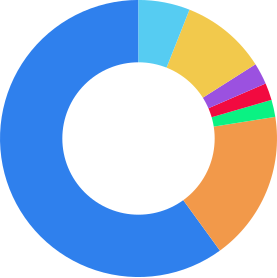
- Cost of goods (PLN 120)
- Operating profit (PLN 12)
- Customer discount (PLN 20)
- Order handling and packing (PLN 5)
- Box, packing material, tape and label (PLN 4)
- Payment processing fee (PLN 4)
- Customer acquisition through advertising (PLN 35)
The original PLN 80 margin leaves about PLN 12 before fixed costs. You still need to cover the store, hosting, software, accounting, taxes, staff time, marketing tools and warehousing. A small rise in advertising costs per click, one uncollected parcel or one return can turn the order into a loss.
Track what you keep from each sale as well as how much you sell.
The risks of low margins and price competition
Trying to be the cheapest online squeezes margins, even as logistics, advertising, customer service, technology and paid clicks can all get more expensive.
A thin margin leaves little room for returns, damaged goods, complaints, new marketing tests or a dip in sales. A product may sell well, but heavy promotion may make little sense if each sale leaves only a few złoty after costs.
A bestseller can bring in substantial revenue and still make little or no profit. Compare products by what they earn after costs as well as by how often they sell.
Hidden costs in technology and user experience
The platform behind your store can help you sell and control costs. It can also create losses you won’t see in the store dashboard straight away.
The wrong technology can limit SEO, make integrations difficult, slow the store down, complicate order handling or leave staff doing work that could be automated. All of this affects profitability.
When the platform doesn’t fit the size of the business
A low upfront price is an understandable reason to choose a platform, but it can be an expensive decision over time.
A cheap platform that doesn’t fit your needs can build up technical debt. Fixing it later may cost more than choosing a suitable platform in the first place.
The most common problems are:
no built-in connections to warehouse and courier systems, so staff have to enter the same data by hand,
limited SEO options, leaving the store to make up for weak organic traffic with more expensive paid campaigns,
little control over the basket and checkout, making it harder to improve conversion,
difficulty adding filters, product variants, automation or connections to sales tools,
maintenance costs that are too high for the volume of sales.
A platform that’s too basic can hold back growth. One that’s too complex can also reduce profitability if its setup, operation and maintenance cost more than the store’s revenue can support.
Choose technology that fits your sales volume, team, budget and plans for growth. Weigh the long-term costs as well as the price of getting started.
How technical problems raise the cost per order
Store performance affects what you get for your ad spend. If the store loads slowly, is hard to use on a phone or has problems with the basket, shoppers may leave before ordering. You still pay for the ad click.
Common technical problems that reduce profitability include:
- poor Core Web Vitals results, including LCP, CLS and INP,
- problems on mobile devices,
- slow category pages, product pages and baskets,
- a checkout that’s hard to use,
- missing popular payment methods,
- problems with delivery or payment integrations,
- confusing navigation or filters that make products hard to find.
A slow or confusing store generates fewer orders from the same ad budget. That makes each order more expensive to acquire.
Technical problems can make each sale much more expensive
Check your store’s performance and user experience before increasing ad spend.

Marketing and marketplace risks
Judge e-commerce marketing by the profit it generates as well as by the orders it brings in.
A campaign can generate orders and still lose money if it promotes low-margin products or costs too much to acquire each customer.
Return on ad spend (ROAS) shows how much revenue the campaign generated for what you spent on ads. It leaves out margins, delivery, returns, discounts, payment fees and order handling.
When to look beyond ROAS and measure POAS
For a store owner, the campaign’s actual profit matters more than its revenue alone. Profit on ad spend (POAS) helps answer that question by comparing profit with what you spent on advertising.
The most common problems in campaigns:
- broad keywords bring in traffic that doesn’t convert,
- promoting popular products with thin margins can increase revenue without increasing profit,
- grouping products without considering their profitability makes ad budgets harder to manage,
- incomplete conversion data can lead to poor decisions about which campaigns to scale,
- campaigns are optimised for revenue while product margins are overlooked.
If you don’t know which products make money, you can spend your ad budget on sales that leave little or no profit.
Neglecting marketing can hurt profitability
Without SEO, useful content, a customer list, remarketing or follow-up after the first visit, the store keeps paying to attract a new audience. That makes profitability harder to sustain as well as limiting orders.
It usually costs more to acquire a new customer than to sell again to someone who knows the store. SEO, email marketing, remarketing, automation, buying guides and abandoned-basket reminders can support both sales and profitability.
We see the same pattern in small specialist shops and large stores with broad ranges. They make one-off sales but have no reliable way to bring customers back. As a result, they keep paying for new visits and miss opportunities to sell again to people who already know them.
The risks of selling through marketplaces
Allegro, Amazon, Empik Marketplace and other platforms can put you in front of customers quickly. Work out what you earn after costs. Marketplaces can be a useful extra channel, but relying on them for all your sales carries risks.
What to look out for:
- sales commissions and paid placement fees,
- pressure to keep prices low,
- less control over the customer relationship,
- more difficulty building your own customer list,
- fewer opportunities for low-cost remarketing,
- dependence on the platform’s rules.
When you sell on a marketplace, the platform controls the channel. It can bring in substantial revenue, but that may do little to build your own brand, customer base or long-term profitability.
Often overlooked: fulfilment, returns and order value
Fulfilment, returns and low order values can eat into profit. Acquiring a customer can cost about the same whether they buy a PLN 40 item or a PLN 200 bundle. The difference is in the margin you keep from the order.
The most common operational problems are:
- leaving packaging materials and staff time out of the product margin,
- underestimating the cost of returns, especially for clothes, footwear and other products where fit matters,
- no upselling or cross-selling on product pages or in the basket,
- low average order value,
- an unsuitable threshold for free delivery,
- too many discounts and promotions.
A return costs more than the postage. Someone has to speak to the customer, receive the parcel, inspect the item and put it back on sale. The item can be damaged, and stock ties up cash in the meantime. With thin margins, one return can wipe out the profit from several successful orders.
Track average order value, return rates, handling costs and profit by product category alongside the number of orders.
Use data to make a plan
Bring data from different sources together so you can see what’s driving profit.
Match the store’s sales data with ad spend, product costs, ERP or WMS data, delivery costs, payment fees and overheads.
The store reports revenue, the ad platform reports ROAS and the accounts show costs. Putting those numbers together shows which products, channels and campaigns make money.
How to calculate what you earn on an order:
Profit =
net revenue − cost of goods − fulfilment and packaging − payment fees − customer acquisition costs − cost of processing returns
What store owners can do next
01
check margins across your range to find products that lose money after costs,
02
pause or reduce advertising for products with thin margins,
03
check the store’s performance and how easy it is to buy,
04
report on margins as well as revenue,
05
review discounts, free delivery and minimum order thresholds,
06
calculate profitability separately for each marketplace,
07
use bundles, cross-selling and upselling to increase average order value,
08
include the cost of returns, complaints and customer service,
09
automate tasks where it saves staff time or helps improve sales.
Find out which products and campaigns are profitable before raising the ad budget. Spending more on sales that already lose money will deepen the loss.
Grow profit alongside revenue.
Find out which products, campaigns and sales channels make money.

E-commerce support and profitability audits
A problem in one part of an online store can cancel out good work elsewhere. Even a well-run ad campaign can struggle to pay off when margins are too thin.
A strong offer can lose sales if the technology makes buying difficult. High sales can still leave the business vulnerable if returns and operating costs absorb the profit.
At Evostudio, we look at the whole sales operation: technology, data, advertising, SEO, user experience, the basket, fulfilment and product margins. That helps us see where the profit is going.
If orders are coming in but the profit at the end of the month falls short, look at the numbers. They can show you where the problem starts.
FAQs
Does a high ROAS guarantee a profit?
No. ROAS leaves out product margins, fulfilment costs, discounts, returns and order handling. A campaign can have a high ROAS and still make a loss.
How can free shipping hurt profitability?
The store pays for free delivery. It can reduce profit per order if the margin doesn’t cover it or the free-delivery threshold is too low.
How does technology affect profitability?
A fast, reliable store that’s easy to use helps more visitors complete a purchase. That lowers the cost per order. The wrong technology can increase costs, limit growth and lose sales.
Is it worth selling on Allegro?
It can make sense as an additional channel if you calculate the margins carefully. Relying on a marketplace for the whole business is risky because of fees, pressure on prices and limited control over the customer relationship.
Can an e-commerce profitability audit be done remotely?
Yes. We can assess the technology, analytics and marketing remotely using data from the store, ad campaigns, sales systems and operating costs.
Summary
Every part of an online store affects the others. More sales can create bigger problems when the store earns too little on each order.
That’s a reason to review product margins, ad costs, technology, fulfilment, returns, order value and the data behind your decisions.
A profitable store needs reliable analytics, efficient technology, control over costs and marketing measured against profit. Start by working out what you keep from one order after costs. That gives you a sound basis for growing the business.
Want to improve your store’s profitability?

Author


Get in touch and tell us how we can help.
Join the businesses that trust us with their projects.




