


Online store on PrestaShop: an advanced platform for demanding e-commerce
Author

Piotr Rompca
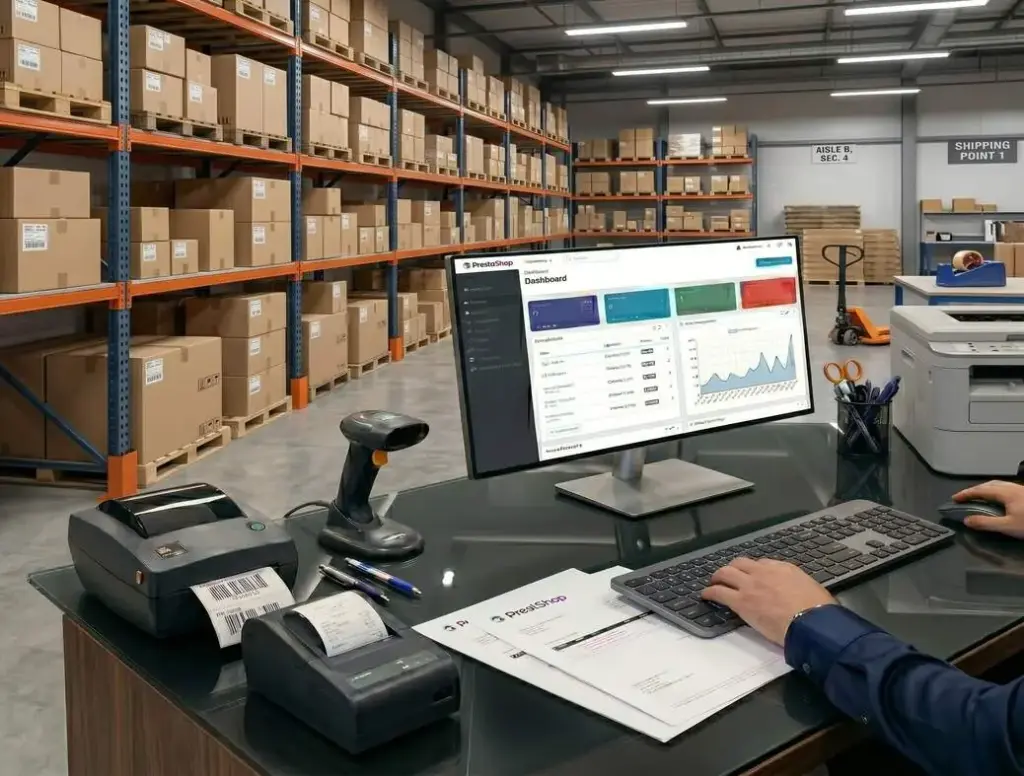
PrestaShop is one of the most recognizable open source e-commerce engines. Unlike simple store creators and solutions that are an addition to a website, PrestaShop was designed from the beginning as an online sales system.
This is an important difference. In PrestaShop, the center of the entire system are products, categories, customers, orders, payments, deliveries, promotions, inventory and sales processes.
Therefore, it is not a tool created first for building company websites and only later extended with a shopping cart. It is a full-fledged online store engine.
PrestaShop works especially well where the online store becomes one of the company’s main sales channels. This applies to medium and larger product stores, wholesalers, B2B companies, brands planning foreign sales and enterprises that need integration with warehouses, ERP, PIM, accounting, payment systems, couriers or marketplaces.
However, this does not mean that PrestaShop is the best choice for every store. It is a system with great possibilities, but requires good implementation, stable hosting, reasonably selected modules, well-thought-out category structure and subsequent technical support.
Worth remembering: A well-planned PrestaShop store can be a strong sales platform for years. If implemented incorrectly, it can become difficult to maintain, slow and expensive to develop.
What is PrestaShop and why is it an engine and not a plugin?
PrestaShop is a stand-alone, professional e-commerce platform. It is not a WordPress module like WooCommerce, or a closed subscription system like Shopify or Shoper.
It runs on its own hosting or server, giving the store owner a lot of control over data, code and further development of the platform.
The system is based on the Symfony framework, which in business language means solid technical foundations, security and compliance with global programming standards.
For the store owner, this means a better foundation for building a stable sales platform which, if properly implemented, can also cope with a larger wave of orders, for example during Black Friday.

PrestaShop is free in the licensing sense because it works in an open source model. This does not mean, however, that a professional PrestaShop store is created without costs.
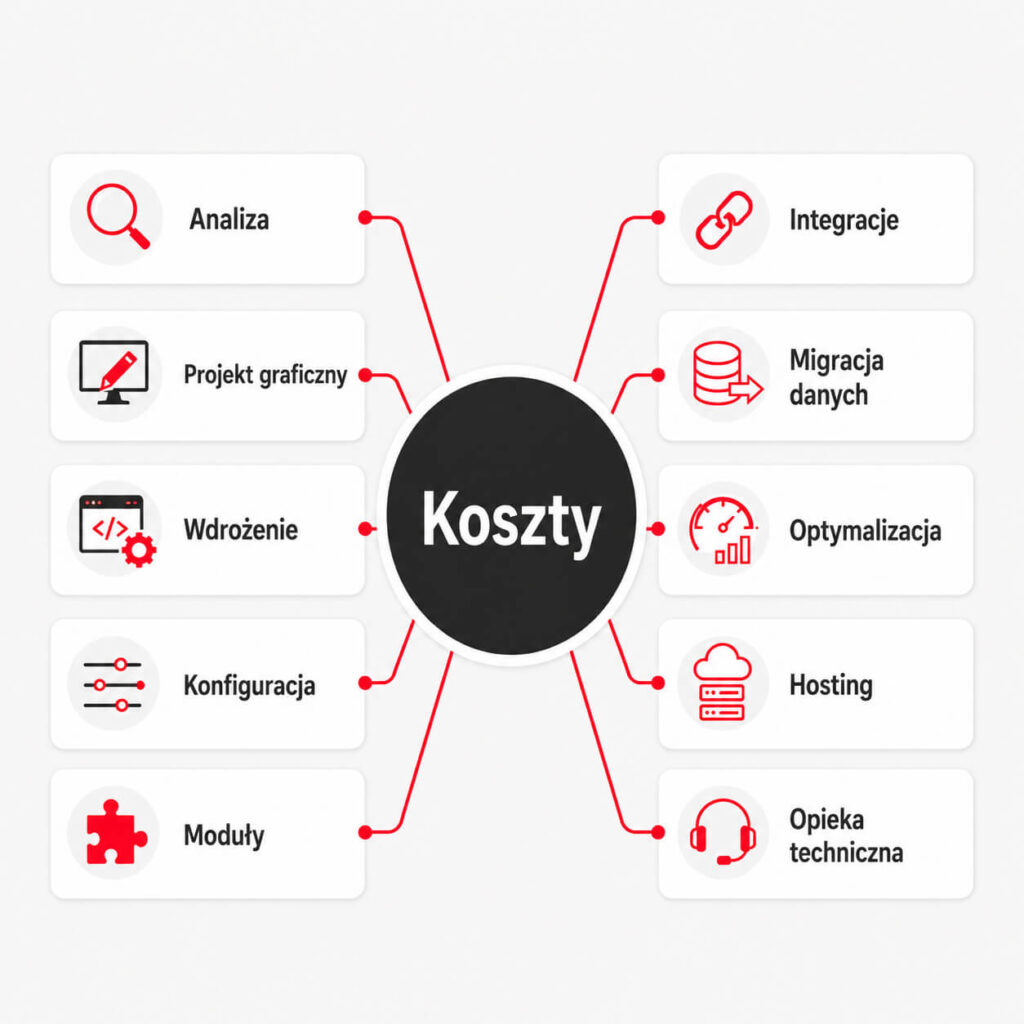
The budget is needed for analysis, UX/UI design, implementation, configuration, secure hosting, industry-specific modules, integrations, optimization and maintenance.
PrestaShop supports almost 250,000 e-commerce stores and websites worldwide. For the business owner, this means access to a mature ecosystem, community, specialists, modules and proven integrations.
PrestaShop as an e-commerce engine, not a website plugin
PrestaShop was built from scratch as an online sales system. Products, categories, orders, customers, basket, payments, deliveries, promotions and stock are a central part of the platform, not an addition to a classic website.
This distinguishes PrestaShop from solutions that come from CMS systems. In the case of such tools, the store is often an extension of the company website.
In PrestaShop it is the other way around: sales, the product catalog and order processing are the basis of the entire system.
This has specific meaning for the store owner. PrestaShop is better suited to a situation where a company has:
- extensive offer,
- many categories,
- different product variants,
- promotions,
- integrations,
- more orders
- several customer groups.
This does not mean that PrestaShop does not allow you to create content. You can build category descriptions, SEO content, guides, landing pages and information sections. However, its main strength is not being an extensive CMS, but supporting online sales.
In practice:
PrestaShop should be treated not as a "cart page", but as a sales system. This is especially important when the store is to support a larger offer, integrations, promotions, many customer groups or sales on several markets.
Who is PrestaShop a good choice for?
PrestaShop works best when the online store becomes more than a simple product catalog. This is a solution for companies that need order in their offer, control over the sales process and the possibility of further expansion.
“PrestaShop is a good choice when a company needs a store that can be developed along with the business, and not just a simple tool for displaying products online.”
This is not a system only for the largest brands. It is also suitable for medium-sized companies that want to develop e-commerce in a more professional way than simple subscription platforms allow.
PrestaShop will be especially useful for:
medium and larger product stores, because it well supports an extensive offer, variants, categories and more complex purchasing processes,
stores with a large number of products, because it allows you to organize the offer according to categories, manufacturers, attributes, features, filters and variants,
wholesalers and B2B companies, because you can develop individual price lists, customer groups, contractor accounts, inquiries and integrations with internal systems,
companies using ERP, PIM or a warehouse system, because the store may become part of a larger company operating system,
brands planning to sell abroad, because PrestaShop supports many languages, currencies and sales configurations,
companies that grew from simple subscription platforms, because it gives you more control over the code, data, integrations and further development of the store.
Do you have a larger product catalog or B2B sales? Let's check if PrestaShop will be a good choice.

The most important advantages of PrestaShop
PrestaShop has many advantages that make it a good choice for more demanding e-commerce projects. The most important of them are the sales logic of the system, good product catalog management, extensive promotions, multistore mode, integrations, no license fee for the engine itself and the possibility of individual expansion.
A system designed specifically for e-commerce
One of the biggest advantages of PrestaShop is that the entire system is designed around online sales. Products, categories, basket, orders, customers, promotions, deliveries and payments are not an addition to the website, but the basis of the platform’s operation.
For the store owner, this means that many functions needed in e-commerce are available at the system level itself.
PrestaShop assumes from the beginning that the company will manage the offer, handle orders, conduct promotions, control inventory and develop sales.
This is especially important in stores where the sales process is more extensive. If a company needs to manage many products, variants, discounts, deliveries, payments and integrations, a typical e-commerce system provides a better starting point than a solution created primarily for building websites.
Good management of a large product catalog
PrestaShop works well in stores that have an extensive offer. This includes products with variants, different sizes, colors, features, manufacturers, attributes and categories.
In practice, this means that the store can better organize the offer and make it easier for the customer to find the right product.
With a larger catalog, simply adding products to the store is not enough. You need to ensure a logical category structure, good names, filters, descriptions, photos, variants and connections between products.
Good catalog management affects more than just customer convenience. It is also important for SEO, advertising campaigns, warehouse management and the work of the sales team.
Worth remembering: The larger the store, the more important the order in product data is.
Extensive promotions, discounts and sales rules
PrestaShop is a good fit for stores that actively sell and need flexible promotional mechanisms. This applies to discounts, promotional codes, special prices, seasonal promotions, campaigns for selected customer groups and rules depending on the basket value.
For the store owner, this means greater freedom in conducting sales activities. The store can support promotional campaigns, sales, temporary offers, campaigns for regular customers and various shopping scenarios.
Such functions are especially important in stores that have high competition, seasonality of sales or conduct marketing activities based on promotions and product campaigns.
Multistore, i.e. many stores from one panel
One of the strong features of PrestaShop is the multistore mode, i.e. the ability to manage multiple stores from one administration panel. This solution is useful for companies that run several brands, serve different markets or want to separate B2C and B2B sales.
Multistore can be used when a company needs to handle:
- separate stores for different countries,
- different language versions,
- various product catalogues,
- different prices and currencies,
- separate sales policies for different customer groups,
- separate B2C and B2B stores.
However, this is not a function that is worth implementing as a spare. Multistore makes sense when a company really needs several stores managed from one place.
Otherwise, it may unnecessarily complicate implementation and subsequent maintenance.
Integrations with ERP, PIM, warehouse, payments and logistics
A modern online store rarely operates independently. Typically, it must communicate with the warehouse system, ERP, PIM, accounting, payment gateways, couriers, marketplaces, marketing tools and analytics. PrestaShop can be part of such an ecosystem.
Well-implemented integrations allow you to reduce manual data rewriting, speed up order processing, reduce the number of errors and better control inventory levels.
For a store owner, the most important thing is not how many systems can be technically connected, but how these integrations affect everyday work.
A well-connected store can automatically update products, prices, inventory, order statuses, invoices and shipping data.
In practice: When sales increase, integrations cease to be an add-on. They become the basis for efficient e-commerce operation.
No license fee for the engine itself
PrestaShop is an open source solution, so the company does not pay a licensing fee for the store engine itself. This is an important difference compared to many closed subscription systems or enterprise solutions, where licensing costs can be an important element of the budget.
However, the lack of a license fee does not mean that the PrestaShop store is free. Costs arise during analysis, graphic design, implementation, configuration, modules, integrations, data migration, optimization, hosting and technical support.
The advantage is greater control over how to invest. The company does not pay for access to the engine itself, but for specific works, functions, integrations and development of the store.
Access to the code and the possibility of individual expansion
PrestaShop gives you access to the source code, which is important for companies that want to have more control over the store. In closed subscription platforms, the company often has to operate within the constraints imposed by the system provider.
In PrestaShop, you can adapt the store to a greater extent to your company’s processes. This applies to integration, modules, product presentation, sales rules, B2B service, purchasing processes and connections with external systems.
This doesn’t mean that every change is worth writing from scratch. Good implementation relies on a reasonable combination of ready-made modules, configurations and dedicated solutions.
The most important thing is that the store is developed in an orderly manner, without accidental modifications that later hinder updates and further development.
PrestaShop disadvantages and limitations
PrestaShop is a powerful e-commerce engine, but it is not a hands-off solution. Its biggest limitations concern implementation costs, modules, hosting requirements, updates, technical support and the risk of accidental store expansion.
PrestaShop requires good implementation
PrestaShop should not be treated as a simple system for quickly “setting up a store”. It can be launched relatively quickly, but professional implementation requires analysis, plan, UX design, configuration, testing, module selection, integration and a stable technical environment.
The biggest problems usually arise not because PrestaShop is a bad system, but because the store has been poorly planned.
Chaotic category structure, random modules, poor hosting, lack of testing and quick rework without quality control can make your store difficult to grow.
In larger e-commerce, the effects of such mistakes are felt very quickly. The store may be slow, have problems with updates, not sync data properly, or make it difficult to implement new features.
Worth remembering: PrestaShop offers great possibilities, but requires a design approach, no accidental installation and adding subsequent modules.
The costs of modules and extensions can increase the project budget
The PrestaShop engine itself is open source, but many professional features require paid modules or programming work.
This especially applies to integrations, advanced B2B functions, payments, deliveries, SEO, marketing automation, marketplaces, reporting and automation.
This is not a defect in itself. This is a natural cost of store development.
The problem occurs when the budget assumes only the launch of the system and does not take into account the company’s real sales needs.
Therefore, before implementation, it is worth determining which functions are needed at the start, which can be implemented later, and which are not necessary. This approach avoids unnecessary costs and reduces the risk of installing modules that do not bring real value.
An individual look of the store requires more work
PrestaShop allows you to create a professional online store, but an individual look should not be understood as a quick change of a ready-made template.
In a larger store, not only aesthetics are important, but also user comfort, product card, basket, purchase process, mobile version, speed of operation and conversion.
A good PrestaShop store design requires the work of a UX/UI designer and developer. You need to plan how the customer will browse products, use filters, compare variants, add products to the cart and finalize the order.
For simple stores, a ready-made template may be enough to get started. In the case of more serious e-commerce, graphic design and UX should be tailored to a specific industry, offer, customers and sales model.
PrestaShop needs stable hosting
PrestaShop needs a stable hosting environment, especially when the store has a larger product catalog, many modules, integrations, advertising traffic, SEO traffic or seasonal sales.
This is not a system that should be run on the cheapest hosting without load analysis.
On a larger scale, server speed, PHP configuration, database, cache, photo optimization, monitoring and security are important.
For the store owner, this translates directly into sales. A slow store lowers conversions, makes shopping more difficult and may worsen the effects of advertising and SEO campaigns.
"Speed is not just a technical issue. It is an element of the store's business result."
Too many random modules can weaken your store
PrestaShop has an extensive ecosystem of modules, which is a big advantage. At the same time, too many random additives can become a problem.
If each new feature is added with another module, without analyzing quality, compatibility and impact on performance, the store may become difficult to maintain over time.
Modules from different vendors can cause conflicts, slow down your store, make updates more difficult, and increase support costs.
A better approach is selection. It is worth choosing only those modules that are really needed, proven and consistent with the store’s development plan. Sometimes a dedicated function will be a better solution than installing another heavy add-on.
Updates require technical support
PrestaShop, modules, template and server environment require updating. In a professional shop they should not be performed without preparation.
The update may affect the basket, payments, deliveries, integrations, modules, store appearance and administration panel.
Therefore, before changes, it is worth making a backup copy, checking module compatibility and testing the most important purchasing processes.
For the store owner, this means that PrestaShop requires constant technical support. It is not enough to launch a store and leave it unattended.
The store is a sales tool, so it should be regularly updated, monitored and tested.
Do you have a PrestaShop store that needs tidying up or development?

PrestaShop and SEO, GEO and visibility in AI
PrestaShop can support SEO well, but it requires proper technical configuration, logical category structure, optimized product descriptions, fast store performance and indexing control.
In a PrestaShop-based store, the following are of great importance:
categories and subcategories,
product cards,
URLs,
meta title and meta description,
headlines,
product and category descriptions,
guides,
internal linking,
filters and parameters,
charging speed.
Each of these elements can help or hinder your store’s visibility on Google.
The biggest mistake is to treat SEO as an add-on after implementation. In a larger store, the category structure, product names, filters, descriptions, variants and indexing should be planned already at the stage of creating the store architecture.
PrestaShop works well in e-commerce, where products, categories and an extensive offer are important. This offers great positioning opportunities, but requires order in the content and product data.
Well-described categories, specific product descriptions, guides, FAQ sections and logical linking help both users and search engines.
GEO, i.e. visibility in generative systems and responses created by AI, is also becoming more and more important. AI systems better understand stores that have organized categories, specific product descriptions, clear attribute names, guides, FAQ sections and content answering real customer questions.
PrestaShop gives you space for such organization, but it will not do it automatically. Visibility in Google and AI systems depends on the quality of implementation, store structure, content, speed of operation and consistent work on the offer.
In practice: PrestaShop can be good for SEO and GEO, but only if the store is planned as an organized product information system, and not just a catalog with descriptions copied from the manufacturer.
PrestaShop and foreign sales and cross-border e-commerce
PrestaShop may be a good choice for companies that plan to sell on multiple markets. The system supports many languages, currencies and sales configurations, which is important for cross-border e-commerce.
However, selling abroad is not only about translating the store.
Each market may require different payment methods, shipping methods, tax rates, messages, regulations, prices, language versions, product descriptions and SEO activities.
PrestaShop allows you to build a more structured structure for such development. Combined with the multistore function, it can support different store versions, separate configurations and different sales models for individual countries.
For the company owner, this means greater control over foreign expansion. Instead of creating several independent stores without a common logic, you can plan a coherent sales ecosystem in which different markets are managed in a more structured way.
However, it is important to remember that international sales increase the complexity of the project. It requires thinking through logistics, payments, taxes, regulations, customer service, translations, SEO and integration.
It is worth remembering: PrestaShop provides tools for foreign sales, but the choice of the system itself will not replace the strategy of entering new markets.
PrestaShop and WooCommerce, Shopify, Shoper and Magento
The choice of an online store engine should result from the business model, sales scale, budget, development plans and integration needs.
PrestaShop isn’t the best for everyone, but for many projects it can be a reasonable compromise between simple subscription platforms and heavy enterprise systems.
PrestaShop and WooCommerce
PrestaShop is better suited to typical product stores, larger catalogs, more extensive promotions and sales processes. It is an e-commerce engine in which online sales are a central part of the system.
WooCommerce works more often when the store is strongly connected to WordPress, a blog, company website, content marketing and educational content. This is a good solution for companies that want to combine sales with an extensive content website.
In practice, the choice between PrestaShop and WooCommerce depends on which is more important.
If the center of the project is an extensive product store, PrestaShop may be a better choice. If the store is part of a larger content-based site, WooCommerce will often feel more natural.
PrestaShop vs. Shopify and Shoper
Shopify and Shoper may be more convenient to start with, especially for businesses that want to quickly launch a simple store and reduce technical issues.
These are subscription solutions in which part of the responsibility for the infrastructure is taken over by the platform provider.
PrestaShop gives you more control over code, data, integrations, modules and further development of the store. However, it requires greater technical responsibility, good implementation, hosting and care.
For a small shop that needs a simple start, a SaaS platform may be sufficient. For a company that wants to develop the store more individually and integrate it with other systems, PrestaShop may be a better direction.
PrestaShop and Magento / Adobe Commerce
Magento, currently Adobe Commerce, is a solution for the largest and most complex enterprise projects. It works well where e-commerce has a very large scale, complex architecture, many markets, many warehouses, large teams and a high technological budget.
PrestaShop may be a wiser choice for medium and larger stores that need a powerful e-commerce engine but don't want to go into the cost, complexity and weight of an enterprise-class system.
This does not mean that PrestaShop replaces Magento in every scenario. These are different tools for different levels of scale.
PrestaShop is often a good choice between simple SaaS platforms and very complex enterprise systems.
How much does a PrestaShop store cost?
The cost of a PrestaShop store depends not on the system installation itself, but on the scope of implementation, the quality of the UX design, the number of integrations, the degree of automation and the requirements for further development.
The budget is primarily influenced by how extensive the store is to be.
The following are important, among others:
- graphic design and UX/UI,
- product card,
- basket and purchasing process,
- mobile version,
- category structure,
- data migration,
- modules,
- integrations,
- payments and delivery,
- B2B functions,
- language versions,
- SEO optimization,
- hosting,
- technical support.
A simple PrestaShop store will cost less than an extensive sales platform with ERP, PIM, marketplaces, multiple languages and an individual UX design.
Therefore, there is no one universal answer to the question of how much a PrestaShop store costs.
The valuation should start with a needs analysis. You need to determine which functions are necessary at the start, which can be implemented in the second stage, and which are not needed.
This approach allows you to control the budget and avoid a situation in which the store is overloaded with functions even before sales start.
In practice: The cost of a PrestaShop store should be assessed not in terms of the installation itself, but in terms of the entire sales system that is to be created.
What most often determines the success of a PrestaShop store?
The success of a PrestaShop store is determined not only by the choice of the system itself. What matters most is how the entire project is planned: category structure, product catalog, modules, integration, server, purchasing process, SEO and subsequent technical support.
In practice, also from my experience with projects implemented in Evostudio, what is most important is not the PrestaShop installation itself, but the way the entire store is planned: category structure, modules, integration, server, purchasing process and subsequent technical support.
A good PrestaShop store should be designed like a sales system. This means that you need to think not only about the appearance of the website, but also about:
- daily work of the team,
- product management,
- order processing, data synchronization,
- speed of operation
- opportunities for further development.
Many problems in PrestaShop stores are due to accidental development. First, one module is added, then another, then a quick modification, then integration performed under time pressure.
After a few months or years, the store is operational, but becomes difficult to update, slow and expensive to develop.
That’s why stable foundations are so important:
reasonable architecture,
proven modules,
good hosting,
clean code,
tests,
backups,
monitoring,
development plan.
PrestaShop offers many possibilities, but it works best when the store development is carried out in an orderly manner.
Is it worth choosing PrestaShop?
PrestaShop is worth choosing when the online store is to be an important sales channel and the company wants to develop it in the long term.
This is a good solution for businesses that need more control than in simple subscription platforms, but do not want to immediately enter a heavy enterprise system.
PrestaShop will be especially useful when:
01
the product offer is extensive,
02
the store requires integration with ERP, PIM, warehouse or marketplaces,
03
the company operates in B2B,
04
foreign sales are planned,
05
flexible management of products, promotions and customer groups is needed,
06
the company has outgrown a simpler solution and needs more freedom.
This is a good choice for companies that start to need more control over the store. If e-commerce has more and more products, orders, integrations and processes, PrestaShop can provide a more solid base for further development.
However, it will not be the best solution for everyone.
If a company wants a very simple store, minimal technical support and a quick start without a major investment, a subscription system may be better.
If the store is to be mainly an addition to the company website and relies heavily on the blog and content, WooCommerce is worth considering.
If the project has an enterprise scale from the beginning, Magento / Adobe Commerce or a dedicated solution may be a good direction.
The most important thing is not to choose PrestaShop just because it is popular or open source. It’s a good system, but for a specific type of projects: more product-related, more sales-related and more technologically demanding.
Not sure if PrestaShop fits your sales model?
Summary
PrestaShop is an advanced open source e-commerce engine for companies that take online sales seriously and need more control over their store than simple subscription platforms.
It works best in medium-sized and larger product stores, wholesalers, B2B sales, projects with an extensive product catalog and companies planning foreign sales.
It offers great possibilities in terms of managing the offer, promotions, integrations, multiple markets and individual store development.
However, it is not a maintenance-free system. It requires good implementation, stable hosting, well-thought-out architecture, reasonable selection of modules and constant technical support.
PrestaShop is worth choosing when the store is to be a long-term sales platform, and not just a quick addition to the website. In such a scenario, it can be a very good foundation for demanding e-commerce.
FAQ: most frequently asked questions about PrestaShop
Co to jest PrestaShop?
PrestaShop is an open source e-commerce platform used to create and develop online stores. The system allows you to manage products, categories, customers, orders, payments, deliveries, promotions and modules extending store functions.
Czy PrestaShop jest darmowy?
PrestaShop is free as an open source engine, but a professional PrestaShop store requires a budget for implementation, graphic design, modules, integrations, hosting, optimization and technical support. A free engine does not mean a free store.
Czy PrestaShop nadaje się do profesjonalnego sklepu internetowego?
Yes, PrestaShop is suitable for a professional online store, especially when the company has a larger product catalog, needs integration, conducts B2B sales, plans foreign expansion or wants to have greater control over the system than in subscription platforms.
Dla kogo PrestaShop jest najlepszy?
PrestaShop is best for medium and larger product stores, wholesalers, B2B companies, brands planning to sell abroad and enterprises that need integration with ERP, PIM, warehouse, payments, couriers and marketplaces.
Czy PrestaShop jest dobry pod SEO?
PrestaShop may be good for SEO, but it requires proper technical configuration, logical category structure, optimized product descriptions, fast store performance, indexing control and well-planned internal linking.
Czy PrestaShop nadaje się do B2B?
Yes, PrestaShop can be used for B2B sales. It allows you to develop functions related to customer groups, individual price lists, contractor accounts, requests for quotation, integration with ERP and wholesale sales processes.
Czy PrestaShop nadaje się do dużego sklepu?
PrestaShop can support larger stores, but requires good implementation, stable hosting, optimization, reasonably selected modules and constant technical support. For very large enterprise projects, it is worth comparing it with Magento / Adobe Commerce or a dedicated solution.
Czy PrestaShop obsługuje sprzedaż zagraniczną?
Yes, PrestaShop supports multiple languages, currencies and sales configurations. It may be a good choice for companies planning cross-border e-commerce, but foreign sales also require preparation of logistics, payments, taxes, regulations, translations and SEO for specific markets.
Jakie są największe zalety PrestaShop?
The biggest advantages of PrestaShop are the sales logic of the system, good product catalog management, extensive promotions, multistore function, integrations, no license fee for the engine itself, access to the code and the possibility of individual expansion.
Jakie są największe wady PrestaShop?
The biggest disadvantages of PrestaShop are the need for good implementation, module costs, higher hosting requirements, the need for technical support, the risk of problems with an excess of random modules and the need to be careful when updating.
PrestaShop czy WooCommerce: co wybrać?
PrestaShop will work better in typical product stores, larger catalogs and more extensive sales processes. WooCommerce will be better when the store is to be strongly connected to WordPress, a blog, company website and content marketing.
PrestaShop czy Shopify: co wybrać?
Shopify may be more convenient to start with and simpler to use technically, but it operates on a subscription platform model. PrestaShop gives you more control over code, data, integrations and further development, but requires your own implementation, hosting and technical support.
Czy sklep PrestaShop wymaga programisty?
A simple PrestaShop store can be configured using ready-made modules, but a professional design usually requires the work of a programmer. This applies especially to individual appearance, integration, B2B functions, performance optimization, data migration and advanced changes in the purchasing process.
Ile kosztuje sklep na PrestaShop?
The cost of a PrestaShop store depends on the scope of the project, the quality of the UX/UI design, the number of modules, integrations, language versions, B2B functions, data migration, SEO optimization, hosting and subsequent technical support. The system installation itself is only a small part of the entire implementation.



Get in touch and let’s see how we can help you!
Join the ranks of our satisfied customers.




