
How to improve your online store’s search rankings
How does SEO help an online store grow?
Author

Piotr Nadolny

Online stores compete for shoppers’ attention. If customers can’t find your store in search, you miss opportunities to make a sale.
Search engine optimisation, or SEO, helps shoppers find your store when they search for what you sell.
What is SEO for online stores, and why does it matter?
SEO is the work you do to make your store easier to find in unpaid search results for terms related to your products. It’s a core part of marketing an online store.
When your store appears well down the Google results, shoppers who are ready to buy may never see it. SEO helps people discover your brand and products over time.
75%
of searchers never click through to a result on the second page, according to the cited estimate
Source: https://blog.hubspot.com/marketing/google-search-statistics
About 55%
of clicks went to the top three organic results in Backlinko’s study
Source: https://backlinko.com/google-ctr-stats
SEO takes ongoing work as search algorithms change. For an online store, strong organic visibility is valuable because it brings in people actively looking for a product or a solution.
Appearing in relevant results can make your store more familiar to shoppers and give them another chance to see what you offer.
What should an effective SEO strategy for e-commerce look like?
Build the strategy around your store and your customers. Repeating keywords in your copy won’t make up for a site that’s hard to use.
Work on the website itself as well as its reputation elsewhere. Technical improvements, useful content and relevant mentions all play a role. Plan around how people shop in your industry and when demand changes.
Give the work time. You may need to rethink your categories, improve product pages or publish buying guides. The aim is to bring the right people to the store and make it easy for them to find what they need.
Book a free consultation

Why start with an SEO audit?
An audit gives you a starting point. It looks at the technical state of your store and how useful its content is to customers.
It can find problems that prevent pages from being indexed or limit their visibility. Large product catalogues and many variations can make an e-commerce audit more involved and may call for specialist tools.
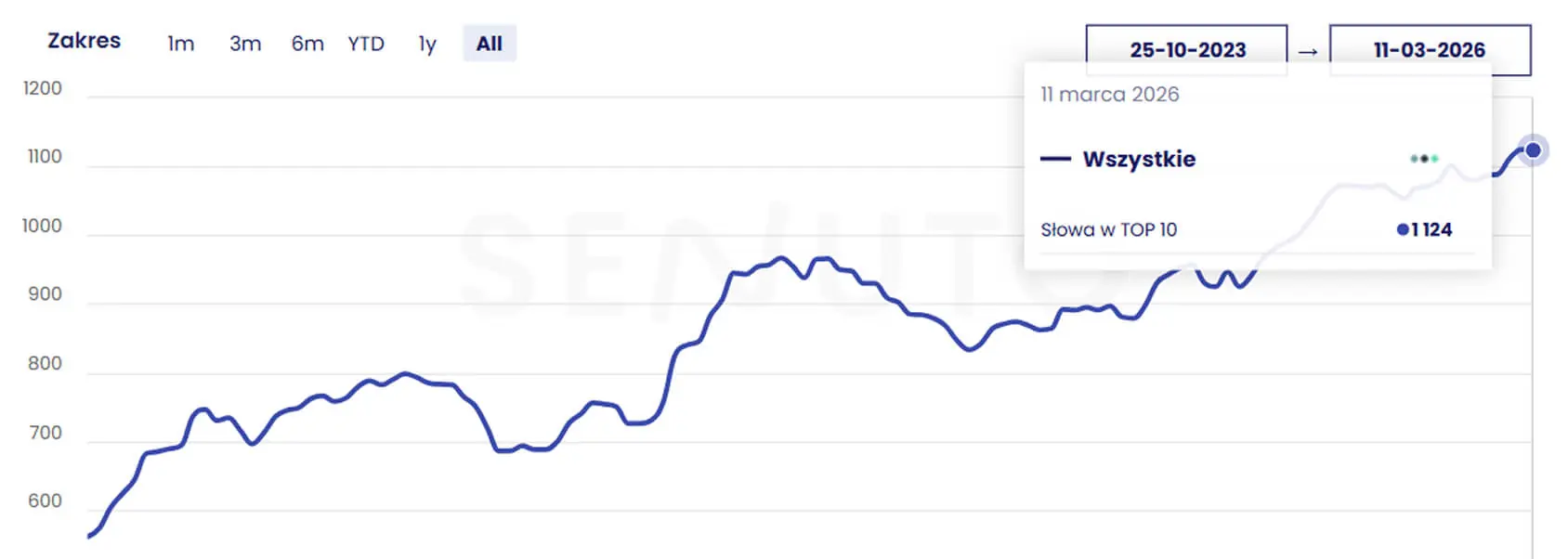
An audit can flag awkward URLs, broken pages that return 404 errors and duplicated content. Use the findings to decide what to fix first and plan the work.
How do you choose keywords for your store?
Start with the terms people actually type when they’re looking for products like yours.
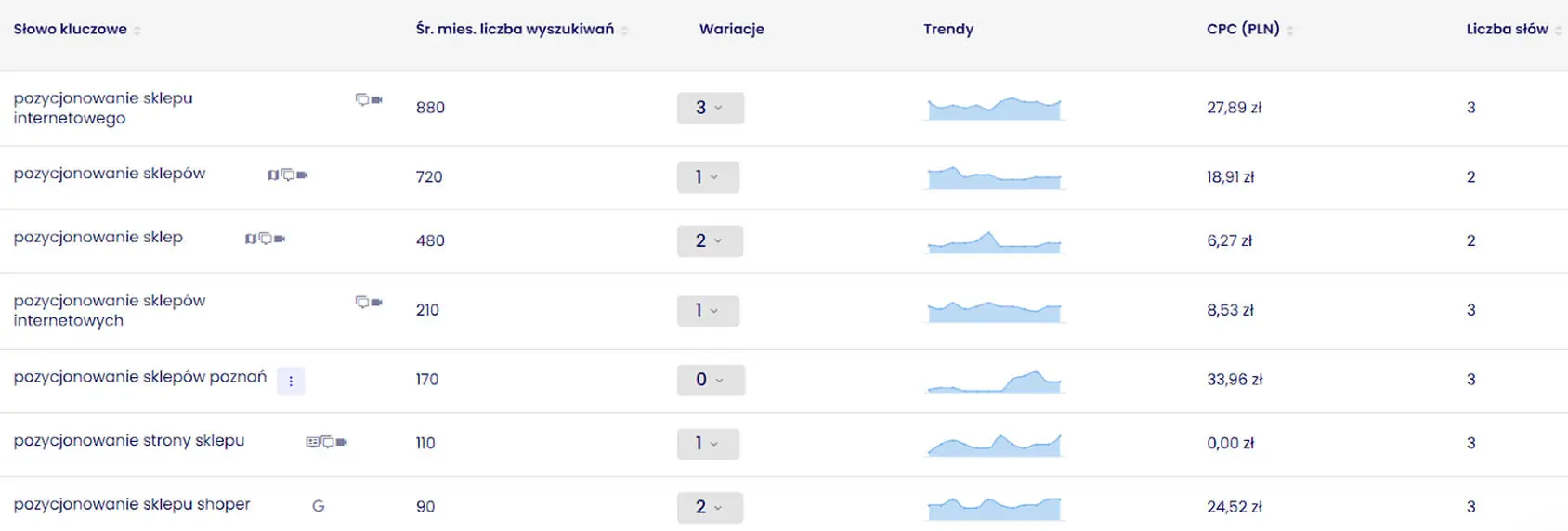
A tool such as Google Keyword Planner can help you find search terms with sales potential. Use both broader terms and more specific long-tail queries. The latter may attract fewer searches but often show clearer purchase intent.
Before doing keyword research:
- define the market you sell in,
- identify the products with the strongest margins,
- find the categories customers are most likely to want,
- check which products you can keep in stock.
That gives you a basis for choosing relevant terms and deciding which parts of your range to promote. The same research can inform Google Ads and Meta Ads campaigns.
How do product descriptions and other content affect search visibility?
Write product descriptions that give shoppers information they can’t get from a copied manufacturer’s description. Reusing the same text as other stores gives search engines and shoppers fewer reasons to choose your page.
Better product information can help shoppers decide to buy

Answer the questions customers have and use the terms they’d naturally search for.
What makes a product page useful?
Original information
Show what makes the product and your offer different.
Answers to shoppers’ questions
A manufacturer’s description often leaves out details your customers want before they’ll order.
A layout that’s easy to scan
Use clear headings and formatting so people can find specifications, prices and other key details quickly.
These changes give people more reasons to trust the store and can help pages appear for relevant searches.
Publish buying guides as well as product descriptions. Articles written from experience can bring in people who are still researching and show what you know about the products you sell. Start with problems shoppers are trying to solve.
What should you check in a technical SEO review?
Technical SEO helps search engines discover, crawl and index the pages customers need to find.
Start with:
Page speed
Slow pages can drive shoppers away. Google uses Core Web Vitals in its ranking systems, but fast pages alone won’t guarantee higher rankings.
Mobile usability
Many shoppers use phones. Google also indexes the mobile version of a page, so make sure mobile visitors and Google can access the same important content.
A clear, crawlable structure
Check the sitemap, robots.txt, internal links and structured data. For large stores, look at how much crawling is spent on filters and duplicate URLs. A clear structure helps search engines find important pages and understand how they fit together.
How can links from other sites help your store?
A backlink is a link to your site from another site. Relevant mentions can help people discover your store and help search engines understand how it fits into the wider web.
Aim for relevant, useful links. Buying links to manipulate rankings or using spam networks can harm search visibility.
Look for legitimate opportunities, such as working with people who review or use your products. Mark paid links as sponsored and focus on giving readers a reason to visit.
Need an SEO plan that fits your store?
An SEO audit can show you where to focus first.

What do AI answers mean for online store SEO?
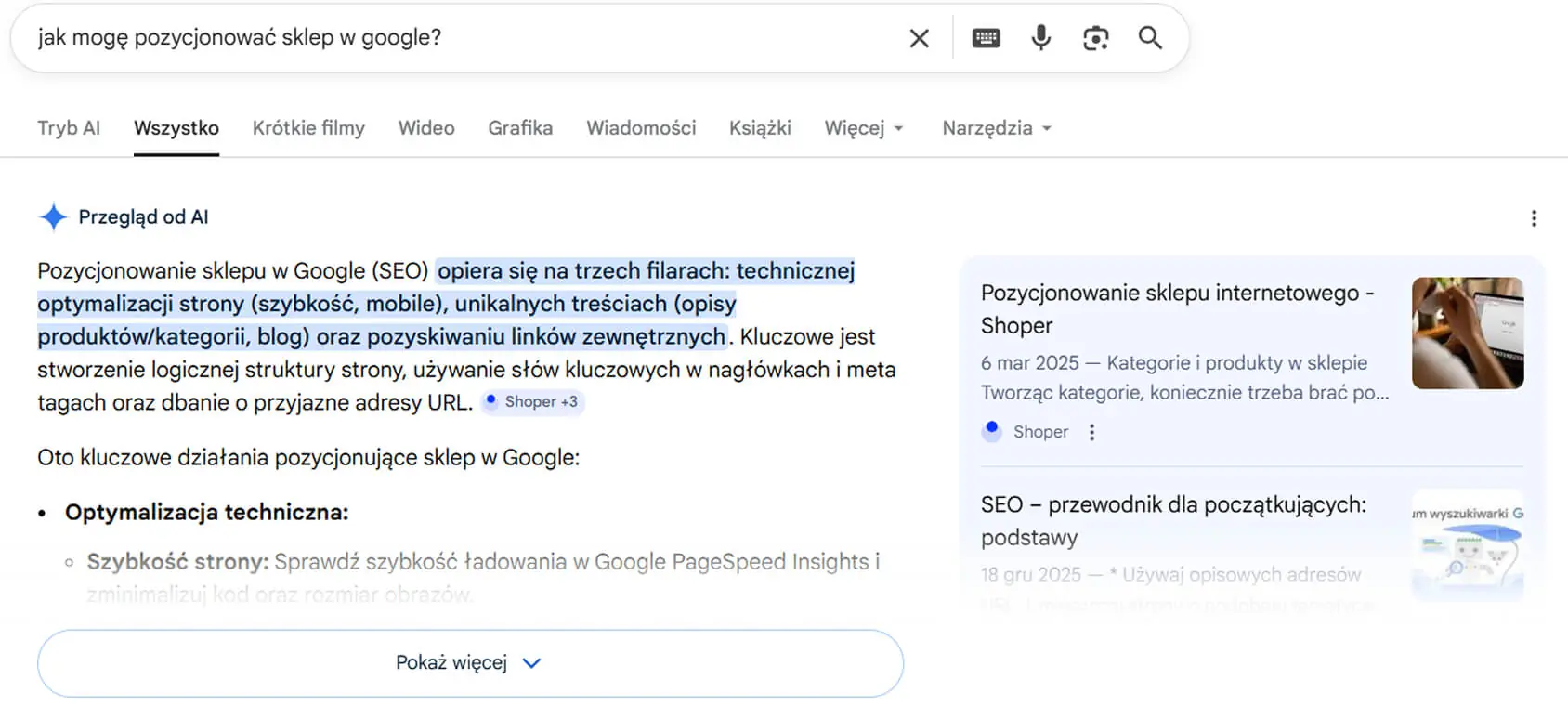
Search now includes AI features that can summarise information and point customers to products or sources.
People can ask detailed questions in ChatGPT or Gemini, or see AI Overviews in Google Search, alongside the searches they already make.
Customers may encounter a product or retailer through an AI answer before they reach the store. Give those tools reliable product information they can interpret, while continuing to make the pages easy to find in search.
Base your content on expertise and accurate, current product details.
Make it easier to find and understand by using:
- a clear structure,
- direct answers to questions, such as what a product is for,
- relevant structured data that matches the page.
Keep descriptions and guides useful and easy to interpret. These steps can help people and search systems understand the page. Google doesn’t require special markup for AI Overviews, and a citation, visit or sale is never guaranteed.
What can you learn from competitors’ SEO?
Other stores are working to reach many of the same shoppers.
Compare the searches your competitors show up for, the content they publish and the websites that link to them. Look for gaps in your own store.
Study how leading stores organise categories and present product information. Their choices can help you see what customers expect and where your store could make things easier.
Wondering how your competitors approach SEO? We can take a look.

Does local SEO make sense for an online store?
If you have an eligible shop or serve customers in person, a Google Business Profile can help people find you in Google Search and Maps.
A location shoppers can visit may give them more confidence in the business. Local search can also help people find a store where they can collect orders in person.
A profile gives customers a place to leave reviews. Those reviews help other shoppers decide whether they want to buy from you.
93%
of survey respondents said online reviews influence their purchase decisions
Source: https://www.podium.com/article/online-reviews-statistics/
How do you measure SEO for an online store?
Use search and sales data to see what’s working. Two tools are particularly useful:
Google Search Console
See impressions, clicks and click-through rates from unpaid Google Search results, and break them down by query or page.
Google Analytics 4
Track visits, what people do on the site and which actions they complete, such as making a purchase.
Review those figures regularly and adjust the strategy as you learn what drives sales.
What should you track?
- visits from organic search,
- average position for relevant queries,
- revenue attributed to organic search.
Check whether increased sales justify what you spend on SEO. Regular reporting helps you see where it’s paying off and where to adjust the work.
How much does e-commerce SEO cost?
The price depends on the work your store needs.
Organic search doesn’t charge you for each visit. Compare the full cost of SEO with paid search and social media ads when you work out how much each channel costs to acquire a customer.
The cost depends on:
Store size
More categories and products usually mean more pages to review and improve.
Industry and competition
It can take more work to compete in a market with several established stores that already invest in SEO.
Link building and content creation
In competitive markets, it may take more time and budget to produce useful content and earn relevant links.
The current state of your site
Existing visibility and the condition of the store’s technical setup affect where the work needs to start.
Treat your SEO budget as a long-term investment. Well-managed SEO brings organic traffic to your store around the clock without requiring you to keep paying for ad clicks.
How long does e-commerce SEO take?
SEO usually takes longer than launching Google Ads. Plan to keep improving the site over time.
Noticeable changes in search visibility may take three to six months. Revenue growth can take several months or more than a year, depending on the store’s starting point. Treat these as rough estimates.
The domain’s history, past security issues, site structure, links from other sites and competition can all affect how quickly you see results.
The gains can last if you keep the store useful, fix new problems and adapt as search and customer behaviour change.
Unsure whether your store needs SEO?See how we can help.

What should you take away?
- SEO helps shoppers find your store when they search for products like yours.
- An SEO audit identifies problems and helps you decide which improvements to make first.
- Use keyword research to plan useful category pages, product descriptions and buying guides.
- Check that the store loads quickly and is easy to use on mobile.
- Earn links from relevant websites that give shoppers a reason to visit your store.
- Use Search Console and Google Analytics to see whether search visibility leads to visits and sales.
Ready to improve your store’s search visibility?

Author
Piotr Nadolny


Get in touch and tell us how we can help.
Join the businesses that trust us with their projects.




